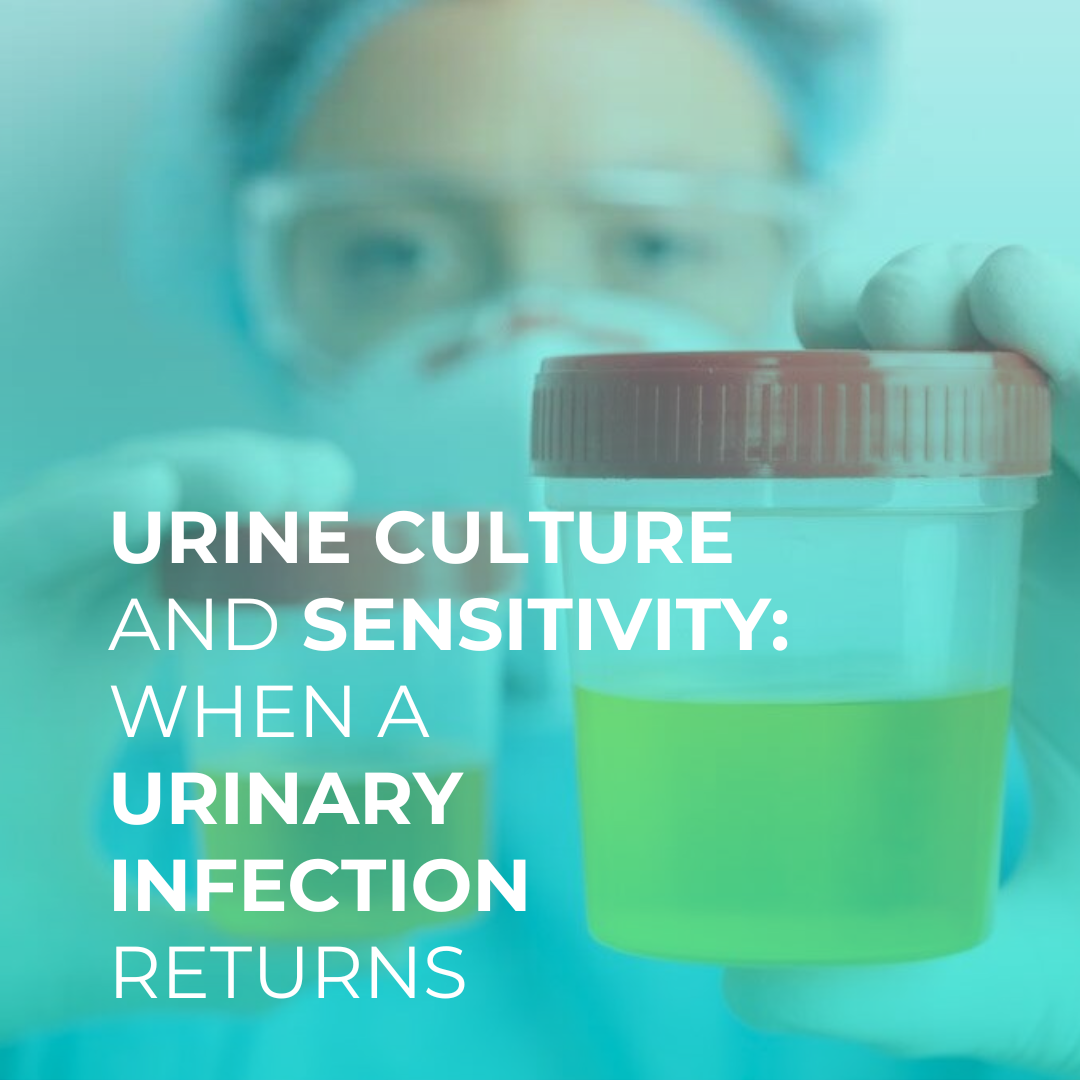
Urine culture and sensitivity: when a urinary infection returns
Urine culture and sensitivity: how they differ from urinalysis
If urinary symptoms return, repeating an antibiotic from a previous episode is not always the answer. Urine culture and sensitivity testing can help identify bacteria and guide treatment when a healthcare professional considers further investigation necessary. At our clinical laboratory in Puerto Viejo and Limón centro, we explain what each test contributes, how to collect a sample and why results need to be interpreted alongside your symptoms.
Urinalysis can detect findings such as white blood cells, blood and certain chemical changes. It provides clues but is not the same as identifying a bacterium or finding out which antibiotics may work against it.
A urine culture grows and identifies microorganisms in urine. If a relevant bacterium is isolated, susceptibility testing examines its response to different antibiotics. The studies complement each other; sensitivity testing is not always possible without a suitable isolate. Learn more about our bacteriology tests.
When might testing help?
Not everyone with urinary discomfort needs a culture. The decision depends on symptoms, medical history and how the illness develops. If episodes return or symptoms fail to improve with treatment, a healthcare professional may need to investigate the cause and review previous results.
If you need medical tests in Talamanca, bring your request and any previous reports. Write down which medicines you have taken and when. IDSA guidance for complicated urinary infections considers previous cultures and recent antibiotic exposure relevant when choosing treatment. The same medicine may not be appropriate for every episode.
What does a sensitivity report tell you?
The report describes how the organism responds to the antibiotics tested. It is not a list from which to choose medication yourself: the prescriber also considers allergies, pregnancy, kidney function and where the infection is located.
An antibiotic that works against bacteria in the laboratory may not be the best option for a particular patient. Report categories also need interpretation according to the system used. MedlinePlus explains antibiotic sensitivity testing; ask your healthcare professional about any result you do not understand before changing treatment.
How to collect a urine sample
Correct collection helps reduce contamination. If you are providing a clean-catch sample, follow the laboratory’s instructions:
- Use a sterile container intended for the test.
- Wash your hands and clean the genital area as instructed.
- Start urinating into the toilet, then collect the midstream portion without touching the inside of the container or lid.
- Close the container and label it with your name and identification number.
- Deliver it promptly. Our instructions specify delivery within two hours of collection.
We usually request the first urine of the morning. If this is not possible, ask us how to proceed. Babies and people with a urinary catheter need specific collection instructions; do not automatically apply the same method to everyone.
What if you have already started antibiotics?
When requested and feasible, collecting a culture before starting antibiotics helps preserve its usefulness. Recent antibiotic use can suppress bacterial growth and produce a falsely negative result.
If you have started treatment, tell your healthcare professional and the laboratory which medicine you are taking and when you last took it. Do not stop or delay prescribed treatment yourself to collect a sample. If you are seriously ill, timely assessment and treatment take priority.
Understanding the result
Bacterial growth needs to be considered alongside symptoms, the amount of growth and sample quality. Sometimes collection contamination means another sample is needed. Your healthcare professional and laboratory can assess whether that applies to your result.
Bacteria may also be present without symptoms, known as asymptomatic bacteriuria. Many people do not need antibiotics for this finding. Important exceptions include pregnancy and certain urological procedures. A positive culture therefore does not automatically mean treatment is necessary. IDSA guidance on asymptomatic bacteriuria explains these distinctions.
As a diagnostic laboratory on Costa Rica’s Caribbean coast, we provide information to support that assessment. If symptoms continue despite no growth, seek advice again: other causes or the effects of recently taken medicines may need consideration.
Do you also need blood tests?
A urine culture uses urine, not blood. In some circumstances, a healthcare professional requests additional tests to investigate a more serious infection or assess kidney function. These are not automatically necessary for every bladder infection.
If blood tests in Puerto Viejo are requested, we can explain the clinical chemistry tests available and their preparation. Each study addresses a different question; blood testing does not replace urine culture. Any fasting instructions will depend on the other tests requested, so confirm the requirements before attending.
When should you seek care without waiting?
Seek prompt medical attention if urinary symptoms occur with fever and chills, back or side pain, nausea or vomiting. These can suggest kidney involvement. If you are pregnant, tell the professional supervising your pregnancy about your symptoms.
Culturing and identifying bacteria takes time; the result is not immediate. Ask about the expected turnaround for your sample and do not wait for the report if you are getting worse.
Healthcare services in Puerto Viejo: planning your visit
At Bioclinic, we perform cultures and susceptibility testing when appropriate. Contact our team before attending to confirm sample requirements and preparation. Follow your prescription and avoid sharing antibiotics or reusing leftovers. Bioclinic – Laboratorio Bioclinic
World AMR Awareness Week, held from November 18 to 24, 2026, offers an opportunity to reinforce responsible antibiotic use with your family.
Understanding urine culture and sensitivity helps you take part in your care. Our aim is to provide useful information, properly processed samples and results your healthcare professional can use as part of your assessment.
BLOG
Urocultivo y antibiograma: cuando una infección urinaria vuelve
October 29, 2026
Hepatitis A: cómo se transmite y cuándo consultar
October 15, 2026
Riesgo de ETS: por qué hacerte los análisis a tiempo
October 02, 2026
Leptospirosis en Limón: prevención y síntomas
September 17, 2026
Lp(a) y ApoB: qué revelan sobre el riesgo cardiovascular
September 09, 2026